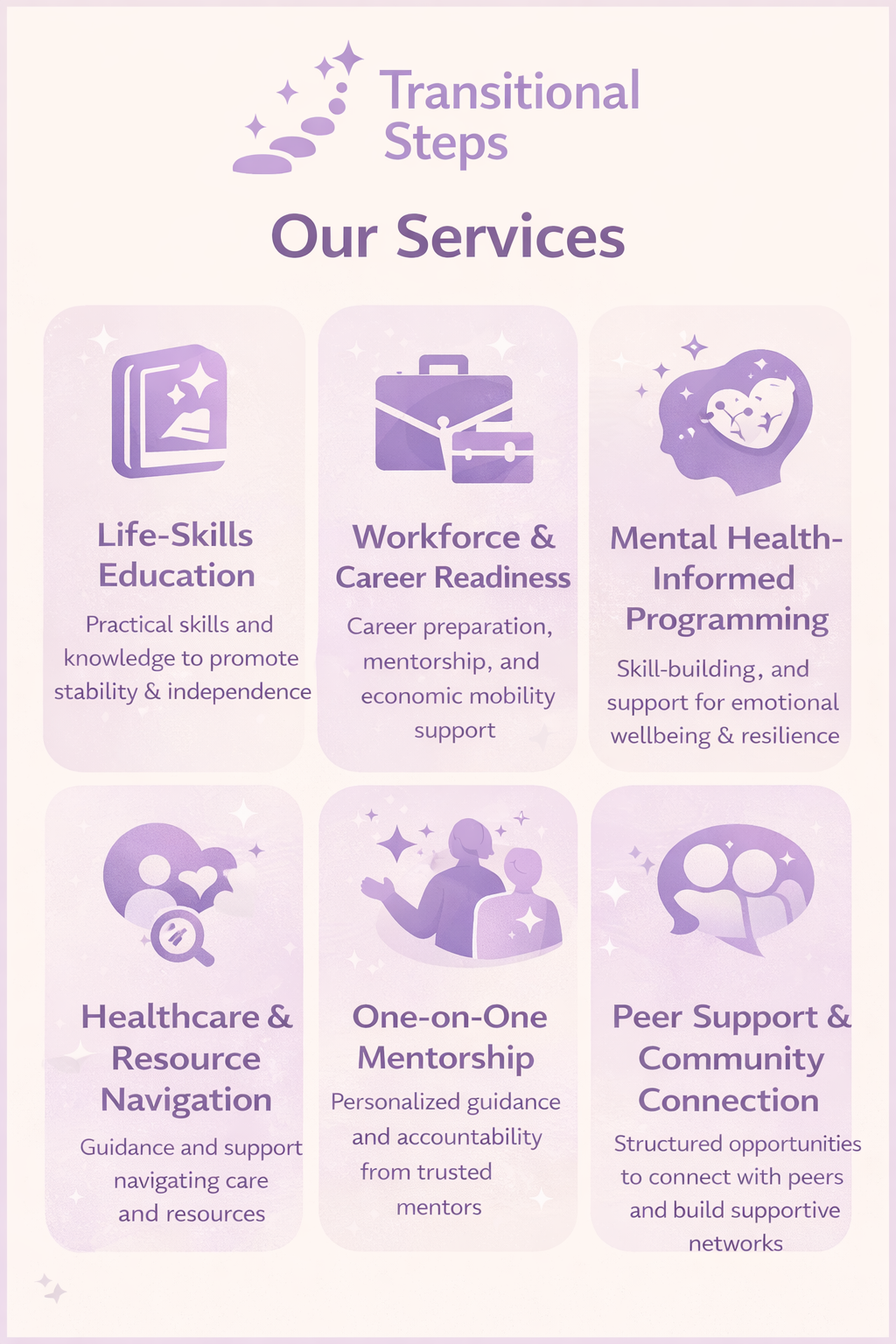
Our Services
Life-skills Education
Workforce & Career Readiness
Mental Health-Informed Programming
One-on-One Mentorship
Peer Support & Community Connection
Transitional Steps provides practical, real-world life-skills education designed to support transitional-age youth as they move toward independent adulthood. Our programming is trauma-informed, culturally responsive, and accessible, meeting young people where they are while equipping them with tools for long-term stability.
What We Offer
Financial Literacy
We help participants develop healthy relationships with money by building foundational skills, including budgeting, banking, understanding credit, saving strategies, and navigating financial responsibilities. Our approach emphasizes empowerment, not shame, recognizing that many young adults have had limited or inconsistent exposure to financial education.
Housing Navigation
Participants receive guidance on understanding housing options, rental applications, tenant rights and responsibilities, and communication with landlords. We also support youth in learning how to prepare for housing transitions, avoid common barriers, and maintain stable living environments.
Health & Wellness Education
Our wellness education supports both physical and emotional well-being. Topics include preventive healthcare, understanding insurance and medical systems, stress management, emotional regulation, self-advocacy in healthcare settings, and building sustainable routines that support overall well-being.
Daily Living Skills
We offer hands-on support in essential daily skills such as time management, organization, meal planning, basic household care, communication, and problem-solving. These skills help young adults build confidence, independence, and a sense of ownership over their daily lives.
Our Approach
Life-skills education at Transitional Steps is relationship-based and flexible. We recognize that independence looks different for everyone, and we tailor support to individual goals, learning styles, and lived experiences, especially for youth who have experienced foster care or system involvement.
Transitional Steps’ Workforce & Career Readiness services are designed to support transitional-age youth in building the skills, confidence, and direction needed to access and sustain meaningful employment. Our approach recognizes that many young adults, particularly those transitioning from foster care, face systemic barriers to education and employment, and we center support that is practical, affirming, and relationship-based.
What We Offer
Career Exploration & Goal Setting
We help participants explore career interests, strengths, and values while learning about different industries, education pathways, and workforce opportunities. Through guided conversations and activities, youth can clarify goals and begin building realistic, achievable career plans.
Resume & Interview Preparation
Participants receive hands-on support with resume development, interview preparation, and professional communication. This includes mock interviews, workplace etiquette, and guidance on how to present lived experience and transferable skills with confidence.
Job Readiness & Workplace Skills
Our programming builds essential employability skills such as time management, reliability, teamwork, conflict resolution, and self-advocacy in the workplace. We also address navigating workplace culture, understanding expectations, and responding to feedback.
Professional Mentorship & Workforce Connections
We connect participants with mentors, community partners, and employment resources that expand their professional networks. These relationships help youth gain exposure to real-world career pathways and trusted guidance beyond program participation.
Our Approach
Workforce & Career Readiness at Transitional Steps is flexible and youth-centered. We recognize that career development is not linear, and we tailor support to each participant’s pace, learning style, and life circumstances—supporting both immediate employment goals and long-term economic mobility.
Transitional Steps offers mental health-informed programming that supports emotional well-being, self-regulation, and resilience for transitional-age youth. Our approach recognizes the impact of trauma, instability, and system involvement on mental and emotional health, and centers safety, trust, and empowerment in all services.
What We Offer
Emotional Regulation & Coping Skills
Participants learn practical tools to identify emotions, manage stress, and respond to challenges in healthy ways. Programming focuses on building awareness, grounding techniques, and everyday coping strategies that can be applied at home, work, or school.
Resilience & Self-Awareness Building
We support youth in developing self-understanding, confidence, and emotional insight. Through guided discussions and activities, participants strengthen their ability to reflect, adapt, and recover from setbacks.
Mental Health Literacy & Self-Advocacy
Participants gain foundational knowledge about mental health, stress responses, and wellness practices. We also support youth in learning how to communicate their needs, seek support, and navigate mental health systems when appropriate.
Safe, Supportive Group Spaces
Our programming creates structured, supportive environments where youth can connect with peers, share experiences, and feel less alone. Group spaces are facilitated with care and clear boundaries to promote respect, inclusion, and emotional safety.
Our Approach
Mental health-informed programming at Transitional Steps is not therapy, but it is grounded in trauma-informed principles. We emphasize choice, collaboration, and cultural humility, recognizing that healing and growth look different for everyone. When additional support is needed, we help connect participants to appropriate community-based resources.
Transitional Steps’ One-on-One Mentorship connects transitional-age youth with consistent, caring mentors who provide guidance, encouragement, and practical support as participants navigate adulthood. Mentorship relationships are built on trust, respect, and reliability, offering youth a stable point of connection during times of change.
What We Offer
Individualized, Relationship-Based Support
Mentors work one-on-one with participants to understand their goals, strengths, and challenges. Support is tailored to each individual’s needs and may include guidance around education, employment, life skills, and personal growth.
Goal Setting & Accountability
Mentors help participants identify short- and long-term goals and break them into manageable steps. Through regular check-ins, youth receive encouragement, accountability, and problem-solving support.
Navigation of Systems & Resources
Mentors assist participants in navigating complex systems such as education, employment, housing, and healthcare. This includes helping youth prepare questions, understand options, and advocate for themselves.
Consistent Adult Connection
For many youth, having a reliable adult who shows up consistently is transformative. Mentors provide a non-judgmental presence, reinforcing that participants are seen, valued, and supported.
Our Approach
One-on-One Mentorship at Transitional Steps is supportive and non-clinical. Mentors are trained in trauma-informed and culturally responsive practices and work within clear boundaries. The goal is not to “fix,” but to walk alongside youth as they build confidence, independence, and a sense of direction.
Transitional Steps’ Peer Support & Community Connection programming creates opportunities for transitional-age youth to build meaningful relationships, reduce isolation, and develop a sense of belonging. We recognize that connection is a critical component of well-being and long-term stability, especially for young adults who may lack consistent support networks.
What We Offer
Peer Support Spaces
We facilitate structured peer groups where participants can share experiences, learn from one another, and build mutual support. These spaces are guided by trauma-informed principles that promote respect, confidentiality, and emotional safety.
Community-Building Activities
Participants engage in group activities, workshops, and events that encourage collaboration, creativity, and connection. These experiences help youth strengthen social skills, build confidence, and form positive peer relationships.
Social Skills & Healthy Relationships
Programming supports participants in developing communication skills, boundaries, and conflict resolution strategies. Youth learn how to build and maintain healthy, supportive relationships in personal, professional, and community settings.
Connection to Broader Community Resources
We help participants connect to community partners, local events, and support networks that extend beyond program participation—encouraging long-term engagement and a sense of belonging in the broader community.
Our Approach
Peer Support & Community Connection at Transitional Steps is inclusive, youth-centered, and strengths-based. We honor diverse identities and lived experiences while creating spaces where participants feel seen, supported, and empowered to grow together.
No results found
Contact us
Interested in working together? Fill out some info and we will be in touch shortly. We can’t wait to hear from you!